
About this game
Core Defense Loop
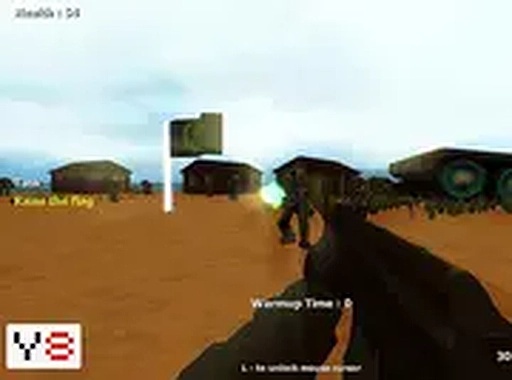
At its heart, Forest Sentinel: Space Assault is about managing a small forest base against periodic attacks from space. Players move a character across a wooded map, searching for resources hidden in cabins and sheds. These supplies directly improve your ability to resist the next wave. The game creates a simple cycle: explore, collect, defend, and repeat. Each wave introduces new pressure, requiring quick thinking about where to go and what to grab first. The forest itself becomes a tactical asset, with trees and terrain offering natural cover and chokepoints.
Team Coordination Mechanics
A standout feature is the flag-raising system. By activating a flag at the base, players send a visual signal to computer-controlled allies, directing them to focus their efforts on a specific area or threat. This mechanic turns a potentially chaotic free-for-all into a coordinated defense. It rewards players who pay attention to the battlefield and think ahead. The allies respond to these signals, creating a satisfying sense of teamwork even in a single-player experience. Learning when to raise the flag and when to let allies act independently is key to surviving longer.
Resource Gathering and Upgrades
Scattered across the map are several small buildings. Entering these structures reveals useful items: medical packs, energy boosts, or defensive tools. These finds are temporary but critical. A well-timed health pack can turn a losing fight, while an energy boost might let you sprint to a distant supply cache before the next wave hits. The game encourages exploration between waves, rewarding players who take risks to search farther from the base. This resource management layer adds depth without overwhelming the player, making each decision feel meaningful.
Progression and Difficulty Curve
Forest Sentinel: Space Assault does not feature a traditional level system. Instead, difficulty increases as waves progress. Early waves introduce basic enemies with simple movement patterns, allowing players to learn the map and test their resource-gathering routes. Later waves bring faster, more numerous foes that require precise flag coordination and smart item usage. The game is designed for short sessions, typically lasting 10 to 20 minutes per attempt. This makes it ideal for quick breaks, though the escalating challenge may encourage multiple tries to push further.
Visual and Audio Atmosphere
The forest setting is rendered in a clean, readable art style. Trees, buildings, and enemies are clearly distinguishable, which is important for quick decision-making. The color palette leans toward earthy greens and browns, with alien attackers providing bright contrast. Sound effects are functional: footsteps, item pickups, and enemy alerts give clear audio cues. There is no voice acting or complex soundtrack, but the ambient forest sounds help maintain immersion. The full-screen mode removes browser distractions, letting players focus entirely on the tactical situation.
Accessibility and Controls
This game is built for desktop browsers and requires a keyboard and mouse. Movement uses standard WASD or arrow keys, with mouse clicks for interaction and flag activation. The control scheme is straightforward, making it easy for new players to pick up. There is no tutorial beyond basic on-screen hints, but the early waves serve as a gentle introduction. The game runs smoothly on most modern browsers without plugins. Its free-to-play model means no paywalls or microtransactions interfere with the core experience, which is a welcome design choice for strategy fans.



Audience comments
Sign in to comment
You must be logged in before posting a review or rating.
No account? Create one
No comments yet. Be the first to comment!