 ArcadeMatrix
ArcadeMatrix
ArcadeMatrix
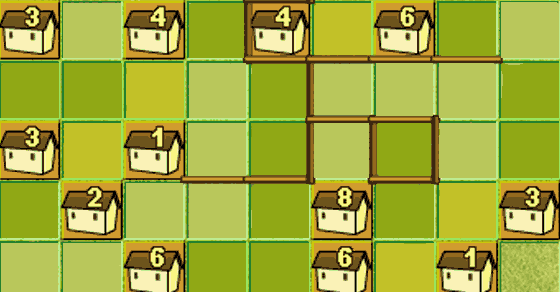
Field Separation is a well-designed logic puzzle that is easy to learn but hard to master. The grid puzzles are varied and become more challenging as you progress. The game encourages strategic planning and spatial reasoning. It has good replay value because each puzzle is unique. The simple interface and lack of distractions make it a great choice for focused play. It is a solid brain teaser for puzzle enthusiasts.
Field Separation is a logic puzzle game where players divide a grid into distinct fields. Each field must be a perfect square or rectangle. The core objective is to cover the entire grid without gaps or overlaps. This simple rule creates a deep strategic challenge that rewards careful planning. The game starts with easier puzzles and gradually increases in complexity, making it suitable for both casual and dedicated puzzle enthusiasts. It offers a relaxing yet mentally stimulating experience for anyone who enjoys spatial reasoning tasks.
To play, you select a starting cell on the grid and drag to expand a field, keeping it as a square or rectangle. Your goal is to fill every cell of the grid with these fields, leaving no empty spaces. If you make a mistake, you can undo your last action or restart the level. The game may provide hints if you become stuck. Success requires careful planning and foresight, as creating larger fields early on can make it easier to fit smaller ones later.
The game features strategic grid puzzles that test logical thinking and spatial reasoning. Each level presents a unique puzzle to solve. The clean design focuses attention on the gameplay. Hints are available to assist when needed, but not every puzzle requires them. The difficulty increases gradually, ensuring a fresh challenge as you progress. The game is suitable for short breaks or longer play sessions, offering a calm but rewarding mental workout.
Start by forming larger fields, as they are easier to place and leave fewer gaps. Plan your moves ahead to avoid creating awkward spaces. Use the undo feature if you make a mistake, and don't hesitate to restart a level to try a different strategy. Practice regularly to recognize patterns and improve your ability to visualize how fields will fit together. Taking your time and thinking through each step will lead to more satisfying solutions.

Clean design and smooth gameplay. Great for short breaks. A simple but satisfying logic puzzle.

Simple swipe puzzles with bright colors. Great for quick, relaxing play sessions.
Clean design and smooth gameplay. Great for short breaks and sharpening logic skills.

Clean design and smooth gameplay. Great for short breaks.

Clean puzzles and fun mini-games. Great for fans of Ben 10 and quick brain teasers.

Clean design and smooth gameplay. Great for short breaks and logical thinking practice.

Clean design and smooth gameplay. Great for short breaks. A solid logic puzzle that is easy to learn.

Clean design and smooth gameplay. Great for short breaks and improving focus.

Clean design and smooth gameplay. Great for short breaks and family fun.