
About this game
Core Movement Mechanic
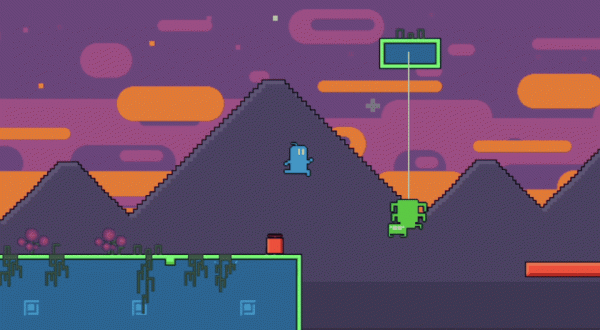
The defining feature of Azure Jumper World Adventure is the character's ability to rotate his head rapidly, creating lift that allows him to drift through the air. This isn't a simple double jump; it requires holding the jump button at the right moment to sustain altitude. Mastering this glide is essential for crossing wide chasms and reaching high platforms. The physics feel responsive, and each stage is built around this mechanic, encouraging players to experiment with how long they can stay airborne.
Obstacle Design & Variety
Each world introduces new types of hazards that demand different strategies. Some creatures snap their jaws when approached, while others scuttle along fixed paths. Sharp spikes and moving blocks also appear, requiring precise landings. The challenge lies in learning each obstacle's timing and pattern rather than memorizing a single solution. This keeps the gameplay fresh and rewards observation over repetition.
Visual Style & Atmosphere
The game presents a bright, cartoon-like aesthetic with distinct color palettes for each world. Backgrounds feature rolling hills, floating islands, and animated elements that make the environment feel alive. Character animations are smooth, especially the spinning head move, which has a satisfying visual effect. The cheerful art style makes the experience welcoming for players of all ages, while still offering depth for those seeking a challenge.
Progression & Final Encounter
Levels are arranged in a linear order, each ending with a checkpoint before moving to the next. As players advance, the difficulty gradually increases, combining multiple obstacle types in tighter spaces. The final stage features a large airborne enemy that requires careful observation of its movement patterns. Players must find openings to land hits while avoiding its attacks, making this encounter a test of everything learned earlier.
Skill Development & Replay Value
Success in this game depends on developing a sense of rhythm and timing. Each failed attempt teaches something about the stage layout or enemy behavior. There are no random elements; every hazard follows a set pattern, so improvement comes from practice. This design encourages multiple playthroughs to achieve faster times or collect hidden items, extending the game's lifespan beyond a single completion.






Audience comments
Sign in to comment
You must be logged in before posting a review or rating.
No account? Create one
No comments yet. Be the first to comment!